Menu
Contact Us
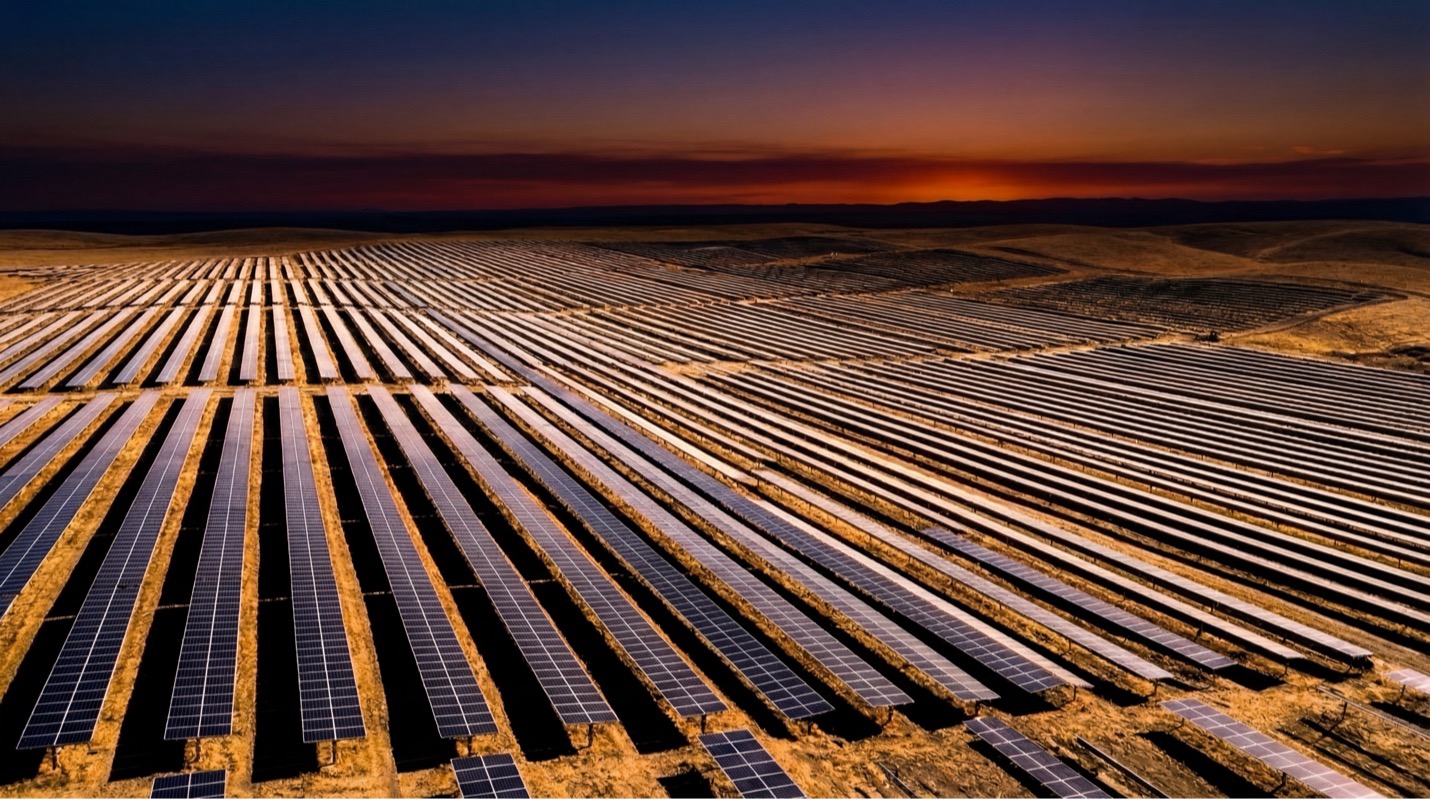
Solar power has become one of the cheapest sources of electricity in the world. Over the past decade, falling module costs, improved efficiency, and large-scale deployment have made solar a cornerstone of the global energy supply. Since 2010, the cost of utility-scale solar has fallen by 90%, according to the International Renewable Energy Agency.
But solar has a fundamental limitation: it only generates electricity when the sun is shining.
In many electricity markets, demand peaks in the evening, just as solar production declines. This mismatch between when solar produces energy and when electricity is most needed limits the full economic potential of solar power while creating challenges for grid stability.
At Reflect Orbital, we are developing a new approach to address this challenge: using satellites to reflect sunlight onto existing solar farms after sunset, extending the hours when solar energy can be produced thus adding net new clean energy supply when human demand is ever increasing.
This approach does not replace solar panels or batteries. Instead, it allows existing solar infrastructure to generate more energy and capture greater value from the grid.
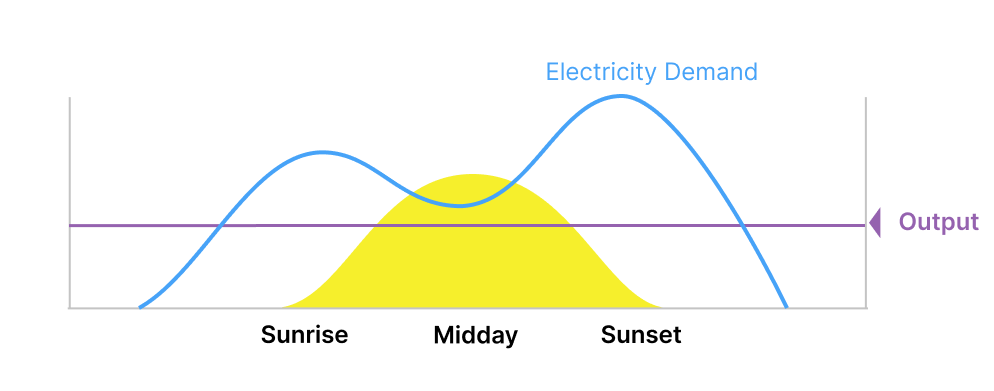
Solar generation follows the sun. Energy production from the sun ramps up after sunrise, peaks around midday, and drops quickly as the sun sets.
Electricity demand, however, often peaks in the early evening when people return home, turn on lights, cook dinner, and use appliances. In many regions this creates the well-known "duck curve," where solar production declines just as demand rises. This disconnect between supply and demand means we have to rely on other sources of energy during those times.
Batteries are an important solution, storing solar energy during the day and releasing it later. Compared to an energy source like solar, storage has significant limitations. Storage adds significant capital cost and land use, has limited duration, and degrades over time. Fundamentally, storage is not a source of energy and requires overbuilding solar panels to charge the batteries during the day.
As solar deployment continues to scale globally, representing over half of new energy capacity added, it is increasingly valuable to extend the effective energy generation windows.
Reflect Orbital satellites are designed to reflect sunlight onto Earth at night.
For solar developers, this means the potential to illuminate existing solar farms after sunset so they can continue producing electricity.
The reflected light is diffuse and nearly identical to natural daylight conditions. It would not be concentrated solar power and would not involve lasers or artificial lighting.
Just as importantly, this approach works with existing solar infrastructure. Panels, inverters, interconnection capacity, and land can all be utilized more effectively.
In short, orbital reflectors extend the hours when solar plants can generate electricity without requiring additional ground-based construction.
Over the course of a year, solar panels typically generate about 20% to 35% of their maximum possible output, depending on location and system design. This has nothing to do with the panels themselves, just when the sun shines on that location when night time and winter are accounted for. For example, solar farms in the Pacific Northwest tend to operate around 20%, while those in Arizona or California can reach closer to 28%. For most of the night, generation is zero simply because the sun has set.
Orbital reflectors address this limitation by enabling solar plants to produce electricity during additional hours before sunrise or after sunset.

Even a modest extension of the generation window can meaningfully increase annual energy output. As satellite constellations scale, this approach has the potential to increase global solar production significantly without building additional solar farms.
This represents a fundamentally different way to scale solar energy: increasing production from existing assets, not just installing more panels or adding infrastructure such as batteries or needing to use new land.
Energy storage plays a critical role in modern power systems, helping shift solar generation from midday into the evening.
Orbital reflection addresses a different challenge: increasing the amount of solar energy available in the first place.
Together, these technologies can be complementary. Batteries shift solar energy to later hours, while orbital reflectors extend the period when solar plants can generate energy at all.
The combination has the potential to significantly increase the availability of clean energy on the grid and allows 95%+ capacity factors to be achieved for loads like data centers.

The world has been negotiating a false choice for 50 years: economic growth or a healthy planet. We believe that trade-off is no longer necessary.
Solar power has transformed the global energy system over the past decade, but its production window remains tied to daylight.
By extending solar generation beyond sunset, orbital reflectors offer a new way to increase clean energy production while making better use of existing infrastructure.
As solar continues to scale worldwide, technologies that improve the utilization and value of solar assets will play an important role in meeting the world's growing demand for electricity.
Reflect Orbital is working to make that future possible. The destination is clear, the technology is real and the need has never been more urgent.