Menu
Contact Us
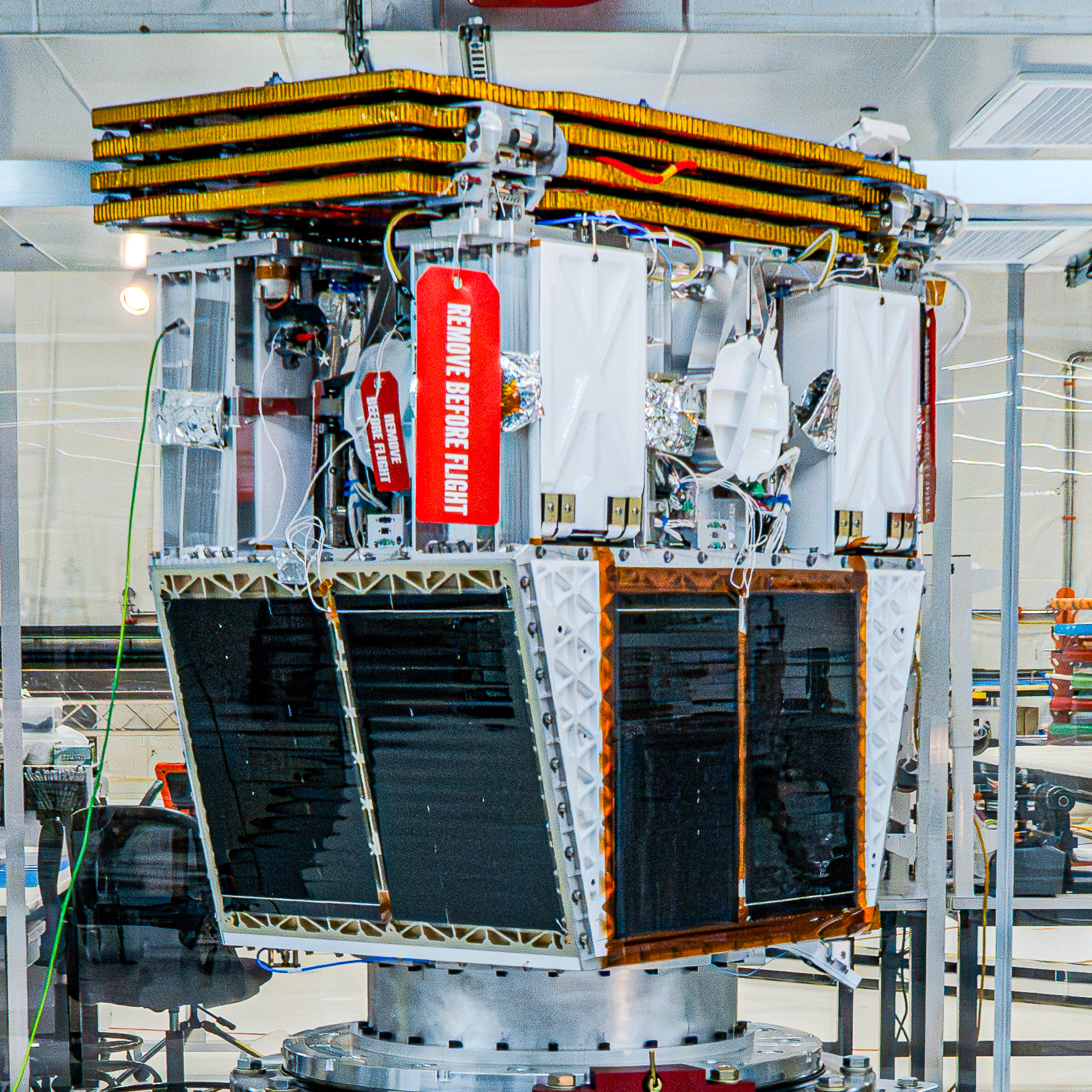
This week, the Federal Communications Commission (FCC) granted Reflect Orbital a license to launch our first demonstration satellite, Eärendil-1, into Low Earth Orbit. Our inaugural mission will be a key moment in our journey, providing the opportunity to validate our technology and the safeguards we have developed, and to collect real-world data to inform our future plans.
Why this matters
Energy is the foundation of modern life: food, water, shelter, medicine, transportation, communication, computation, manufacturing, safety, and human opportunity. The quality of life many people experience today has been made possible because previous generations found ways to produce and use more energy than ever before.
Yet billions of people globally still do not have access to reliable, abundant sources of energy. And much of the energy system we inherited still depends on finite fuel sources that damage human health, destabilize the climate, and degrade the environment we all depend on.
The challenge is not simply to produce energy. It is to produce vastly more energy than ever before, at global scale, quickly enough to make a difference - all while keeping it clean. This is one of the defining problems of the 21st century.
What we’re building
Reflect Orbital is exploring a new way to extend the utility of sunlight: reflecting sunlight from orbit to precise, targeted areas on Earth. Our goal is to deliver light and energy to help make existing solar infrastructure more useful beyond the hours when direct sunlight is available, reduce fossil-fuel dependence, increase energy resilience, and support critical operations.
This does not replace solar, wind, storage, nuclear, geothermal, transmission, or efficiency. Humanity will need many solutions. The energy problem is large enough, urgent enough, and consequential enough that new categories of clean-energy technology deserve to be built and tested.
Earning the right to scale
The night sky matters. Darkness matters. Astronomy matters. Wildlife, ecosystems, human health, cultural heritage, and public consent matter. The sky is not empty space, and it should not be treated as if it belongs to any one company, country, or generation.
Reflect Orbital is earning the right to operate and to scale. That means proving that reflected sunlight can be controlled precisely, used only where appropriate, limited in brightness and duration, and coordinated with affected communities and scientific institutions. It means measuring real effects, not assumptions. And it means being willing to change course if the evidence does not support deployment.
We are designing accordingly: precise control, strict limits, public data, independent reviews - and honest discussions about the risks of action and of inaction.
It is easy to see the risks of a new technology because change is visible. It is harder to see the risks of inaction because they are distributed, delayed, and familiar. But in energy, inaction is not neutral. If the world fails to create abundant clean energy, the consequences will be measured in poverty, instability, preventable disease, lost opportunity, continued fossil-fuel dependence, and unnecessary human suffering.
The world needs abundant clean energy. Reflect Orbital exists to demonstrate how sunlight from space can become an important part of humanity's clean-energy future. We’re grateful to the FCC for recognizing our responsible approach to development and deployment, and we’re so excited to have the opportunity to start demonstrating the significant benefits of our technology to the world.